Revelation 21:1-6 New heaven, new earth
The End of Days. Not something we talk about a lot as a Methodist church. Methodists are not prone to stand on street corners and shout, “Repent for the end is near!” It’s just not our thing. That doesn’t mean we don’t believe in the end of days. We do. We believe there will come a day when this earth is no longer in existence as we know it. We believe that our Lord and Savior will rise, or descend, which would probably be the better term, again.
We do believe in the Rapture. We see it as the culmination of the world, a big word to say, God’s purpose in creating our world will be fulfilled. We see it not as an end but as a fulfillment. A time of joy and great celebration when all of the world is living the gospel of God’s love, bringing the experience of God’s love to the here and now, to the present, whenever that present me be. It is when God’s love truly transforms the lives of all the people in this world to express their love for one another.
To me, that means a time will come when we will stop repeating history over and over and over again. When we stop using brute force and ignorance to oppress people. A time when war will cease to exist. A time when human beings will at long last learn to stop hurting one another and exist happily together despite our differences. A time when we will learn to love one another.
We don’t often preach using Revelation because the truth is, we don’t have a clue what most of it might even mean. It is a book of dreams, written in symbolism, the meaning of which has been long lost to antiquity, that flows like a dream into our reality. A beautiful book, but we cannot assume that it means literally what it says. Nor can we assume that there is no literal meaning to any of it.
The biggest thing we struggle to comprehend is that we cannot jump back and forth between assuming something is symbolism and then interpreting the next phrase literally at will. When it comes to the book of Revelation, we cannot assume we know anything. John of Patmos, the author, despite what tradition tells us, is unlikely to be the same John that authored the Gospel of John, or the apostle John. A disciple of Christ to be sure but quite possibly one that may appear nowhere else in the Bible.
When you do a Bible Study on Revelation, everyone shows up to the first class all excited, thinking they are going to be miraculously enlightened, as if they are finally they are going to the book interpreted as if God has suddenly given a random pastor or church leader has received the revelation needed to understand what Revelation actually means. Information that cannot be found in any book and that has not been readily broadcast to the rest of the world. It’s a miracle!
Such optimism, I do love it. But, if we could interpret Revelation, rest assured, it would be general public knowledge and available to you in countless books and YouTube videos by now.
Here’s what we can tell. “Then I saw a new heaven and a new earth, for the first heaven and the first earth had passed away, and the sea was no more.” That’s just tragic from our human standards and does not bode well for anything else on our planet either. We as humans, you see, need water to survive, and if we have either done something so stupid and catastrophic or a natural cosmic event has occurred that the sea is no more, we’ve got big problems.
As scientists are searching the universe, the main stipulation we use to determine the habitability of a planet is: Does it have water? In our creation story, what is the first thing God does to our planet after creating the heavens? God parts the waters of chaos. Where did ancient civilizations develop? Near water. It’s important. There is no way we could survive without it unless God directly intervened with us.
A time will come when this earth and all that inhabit it are destroyed. That’s what we know. But also, we do not know the day or the hour when it will come. Hence, why we don’t stand on street corners shouting the end is near, it is probably one day closer than yesterday but we worship the God that controls time, so maybe, maybe not, but probably.
We know that God loves their creation. God has provided for it everything it needs. God intervenes in our daily lives, showing us love and kindness, and compassion in our suffering and in our celebration. And has this crazy dream that one day, we too, human beings will be able to exhibit this type of love to one another.
As United Methodists, we believe that the home of God is among the mortals. We believe that God dwells among us and in us and around us. We have, since the beginning of time, wanted this God that Revelation speaks of, to more literally dwell among us, which is why the Israelites cried out for that human king they so desperately desired in Jesus Christ.
We believe that one day every tear will be wiped away and death will be no more. Mourning and crying in pain will be no more. We believe on this second Earth, these things will not exist. We believe that in the culmination of existence, no belly will be hungry, no throat will be dry, no hand or word will harm another, and every human being shall bow down and worship one God.
These things will come to pass, at a price. The world as we know it will be gone.
In that day, the home of God and the home of mortals will be the same.
Just as I struggle to imagine a world where human beings actually get along, so too do I struggle to imagine a world with no water. On this earth, water is such a peaceful, life-giving thing.
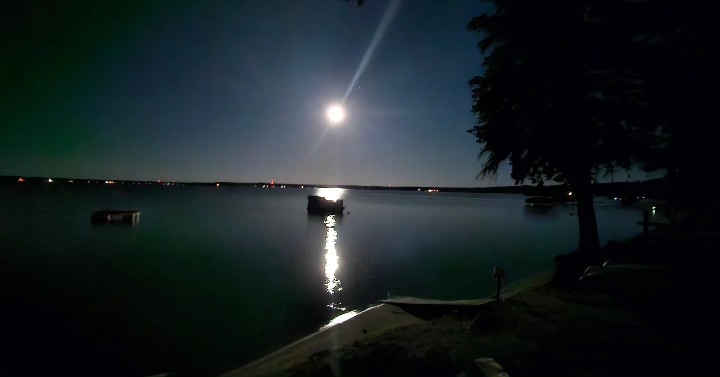
I grew up in Michigan. Home of the largest quantity of freshwater per square mile than anywhere else in the world. I miss it. If you imagine your favorite place on this earth, the odds are really good that place contains some kind of water feature. Whether it be a stream, river, lake, pond, ocean, sea, or even a fountain. Humans love water. It is our life.
But what do we do with something we cannot understand in the least? A concept we cannot fathom? A world with no water, a book divinely inspired by God we cannot read. What do we do with all this uncertainty?
Easy. We live. Don’t complicate it more than it already is.
God lived and walked among us. God has more faith in humanity than we do that humans are capable of being what God believes we can be. “See, I am making all things new.” Things are being made new even as we speak without our needing to understand how the flowers grow, how the Kreb’s Cycle works, or whether or not Jesus was a vegetarian.
We stop fill our days asking this question: why? Why does this happen? Why did that happen? Why do people do the things they do?
Even heaven, which we do not understand, the present one, will be something new. Heaven and earth will pass away and all that time spent arguing over how we think it should work will have been a waste of our precious time here on the earth that exists now. There are just some things we are not meant to comprehend.
I hate to tell you this, but this whole section here of verses 3 and 4 talking about the home of God being among the mortals, us being his people, him wiping away our tears, and death being no more could very well have already come to fruition through Jesus Christ. Then, where does that leave us? Do we already exist in a new heaven and a new earth? Or is it like all other things that have come to pass in that it will come to pass again?
The End of Days. Not something we talk about as a Methodist church. Methodists are not prone to stand on street corners and shouting, “Repent for the end is near!” It’s just not our thing. That doesn’t mean we don’t believe in the end of days. We do. We believe there will come a day when this earth is no longer in existence as we know it. We believe that our Lord and Savior will rise, or descend, which would probably be the better term, again.
Which is exactly why we don’t generally preach on Revelation because after all that attempt at an explanation, here we are again, exactly where we began, perhaps slightly wiser for have made the journey, but the outcome has not been changed.
We as Christians must live as if we have one life to live and the hope to live it again, not in reincarnation, but as a new heaven and a new earth, with less pain, less suffering, and… more forgiveness. That’s really the key isn’t it? That’s really the point of everything isn’t it? Forgiveness? To love one another as God loves us.
To break the cycles of hate that exist in this world. To break the cycles of betrayal and to exhibit love to one another as God loves us. To wipe away the tears of those around us, offer comfort. Stop expecting to understand and just embrace some uncertainty. You don’t have to have all the answers, you are not going to get them anyway.
You will hear me give a sermon from time to time where perhaps the whole point of it is that it doesn’t make any sense at all. A whole lot of beautiful words that seem as if they are whispering something profound, telling you a secret that might not make sense now, but one day perhaps it will.
I will however try to make it easy for you because I said it near the beginning and will say it again. The day of Revelation, the Rapture, The End is when God’s love truly transforms the lives of all the people in this world to express their love for one another. It’s the same message I give you every Sunday.
Through forgiveness we exhibit love. So let’s embrace something else we do not fully comprehend but that we trust in because we have seen its benefits to us. Let us repent of our sins, seek forgiveness from God and one another, and engage in Holy Communion.
 Dark-Hope
Leave a comment